Camel, Horse or Jeep: Choosing the Right Safari in Pakistan
Safari in Pakistan means something different from an African game drive. Our three safaris cross two of the country's most distinctive landscapes: the Cholistan desert in southern Punjab by camel, and the Deosai plateau, a national park above 4,000 m, on horseback or by jeep. They suit different seasons, fitness levels and travel styles.
This guide compares the three, explains what each day is like and helps you decide which fits your trip.
The three safaris side by side
| Programme | Days | Best time | Highest point | Starts from |
|---|---|---|---|---|
| Cholistan Camel Safari | 7 | October to March (cooler months) | — | Bahawalpur (arrive via Islamabad or Lahore) |
| Deosai Plains Jeep Safari | 10 | Mid July to Mid September. | 4,114m | Islamabad International Airport, Islamabad |
| Deosai Horse Safari | 11 | Mid-June to End-September | 4,114m | Islamabad International Airport, Islamabad |
Durations, seasons and altitudes as published on each safari page.
Camel safari in the Cholistan desert
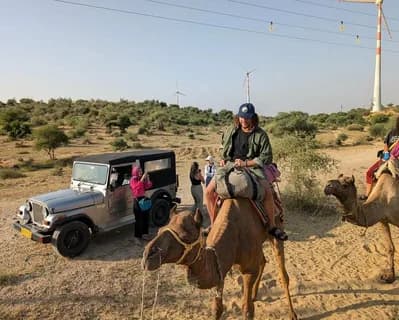
The Cholistan camel safari is a 7-day journey that starts in Bahawalpur, with time for the Noor Mahal palace, before driving to Derawar Fort, the desert's great landmark, where you meet the local camel team. Over the following days the caravan travels along old nomadic trading routes to Channan Pir, the ruined desert fortress of Bijnot and Dingarh, before a final morning ride back to meet the support vehicles.
This is the only one of the three safaris for the cooler months: its published season is October to March, when desert days are pleasant and nights are cold. Riding a camel for several hours is tiring in an unfamiliar way, but no riding experience is needed. The Bahawalpur and Cholistan guide covers the forts and the city.
Horse safari on the Deosai plateau
The 11-day Deosai horse safari flies to Skardu, drives past Satpara Lake to the Ali Malik pass, and then continues on horseback to Barapani. A full day at Barapani is set aside to explore the national park and look for wildlife such as brown bears and marmots, before the ride continues past Kalapani to Sheosar Lake and the group drives back to Skardu.
The published season is mid-June to the end of September and the plateau lies at about 4,114 m, so altitude is part of the experience. Basic riding confidence helps; tell us honestly how much you have ridden so the horses and pace can be matched to the group. Nights on the plateau are in tents.
Jeep safari across Deosai to Astore
The 10-day Deosai Plains jeep safari is the easiest way to experience the plateau. After the flight to Skardu and an acclimatisation day in the Shigar valley and Khaplu, high-clearance jeeps climb to Sheosar Lake, spend a full day crossing the heart of the plateau via Barapani and Kalapani, and leave by its western edge at Chillum Chowki, descending to the green Rama Meadows near Astore before returning south along the Karakoram Highway.
Its published season is mid-July to mid-September, the window when the plateau is green and the tracks are reliably open. It suits travellers who want the landscape and wildlife without long days in the saddle or on foot.
How to choose
By season
Travelling between October and March? Choose the camel safari; Deosai is snowbound. Travelling in summer? Choose between horse and jeep on Deosai; the desert is very hot in summer.
By effort and comfort
The jeep safari is the least physical. The camel and horse safaris involve several hours a day in the saddle and nights camping, and the horse safari adds high altitude. Our guide to altitude sickness applies to both Deosai trips.
By interest
For history and desert forts, choose Cholistan. For wildlife and wide open alpine landscapes, choose Deosai; our guide to the wildlife of northern Pakistan explains what lives on the plateau and how to watch it responsibly.
Practical points
- Pack layers for all three: desert nights are cold in winter and the Deosai plateau is cold at night even in August.
- Bring sun protection and a hat; there is little shade in the desert or on the plateau.
- The Deosai flights to and from Skardu depend on the weather, with the road via Chilas as the fallback, so keep your onward plans flexible.
- On Deosai, stay on the existing tracks and never feed wildlife; the plateau is a protected national park.
Getting to the start
The camel safari begins in Bahawalpur, which you reach from Islamabad or Lahore; the programme's first afternoon is spent in the city, including the Noor Mahal, before the drive to Derawar Fort. The two Deosai safaris start in Islamabad and fly to Skardu. That flight depends on clear weather, and if it is cancelled the group drives via Chilas instead, using the next day of the itinerary for the overland journey.
On the way back, the horse safari returns to Skardu and flies or drives to Islamabad, while the jeep safari leaves the plateau to the west, through Astore and down to the Karakoram Highway, so it sees a different side of the mountains on the way home. If you would like to add Hunza or Skardu sightseeing to either Deosai safari, tell us when you plan.
Frequently asked questions
Do I need riding experience for the camel safari?
No. The local camel team handles the animals and you ride at a walking pace. It is still tiring for several hours a day, so build in rest where you can.
Can I see bears on Deosai?
Sightings are possible but never certain. The Himalayan brown bear is the animal the national park was created to protect; a full day of the horse safari is set aside to explore the park and look for wildlife.
Which safari is best for families?
The jeep safari is the least strenuous, although the altitude on Deosai still deserves care with young children. Talk to us about your group.
When is Deosai open?
Only in summer. Our jeep safari runs from mid-July to mid-September and the horse safari from mid-June to the end of September.
Where does the camel safari start?
In Bahawalpur, which you reach via Islamabad or Lahore. The safari runs from October to March.
Choose your safari
Compare the full itineraries on our safari page, or tell us your dates and interests through the contact form and we will recommend the one that fits.