
Choosing a Climbing Expedition in Pakistan: 6,000 m, 7,000 m or 8,000 m
Pakistan has a ladder of climbing objectives, from peaks around 6,000 m that can be climbed in under three weeks to the 8,000 m giants of the Karakoram that need around seven weeks. Each step up demands more experience, more time on the mountain and more self-sufficiency at altitude.
This guide compares the expedition programmes we publish, Khusar Gang (6,400 m), Gasherbrum III (7,952 m) and K2 (8,611 m), and explains how to judge which step is right for you.
Three expeditions compared
| Programme | Highest point | Days | Zone | Best time |
|---|---|---|---|---|
| K2 Expedition | 8611 m | 51 | Permitted | Mid-May to End-August |
| Gasherbrum III Expedition | 7,952 m | 40 | Permitted | Mid-May to End-August |
| Khusar Gang Expedition | 6400m | 18 | Open | Mid-May to End-August |
| Nangma Valley Rock Climbing | 5850 m | 29 | Open | June to End-August |
Values as published on each expedition page. Nangma Valley is a rock-climbing programme rather than a summit expedition and is covered in its own guide.
The first step: a 6,000 m peak
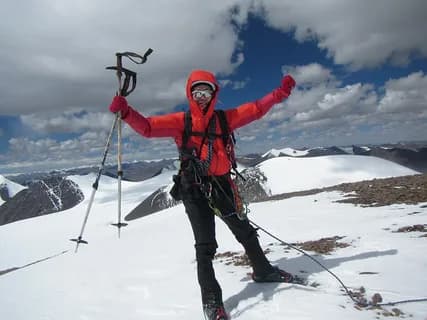
Our Khusar Gang expedition is an 18-day programme to a 6,400 m peak close to Skardu. The approach is short: a jeep drive to Kashmal village and a trek of about three hours to base camp, followed by eight days set aside for acclimatisation and climbing. The programme describes the climb as technical, and it is listed in the open zone; the programme notes that no climbing permit from the Ministry of Tourism is needed for this peak.
A peak of this height is a sensible first expedition for climbers who already have glacier travel, crampon and ice-axe skills and some experience above 5,000 m. Note the exclusions: high-altitude tents, high-altitude food, a high-altitude porter, gas and oxygen are not included, so you need to plan your mountain kit and support with us in advance.
The middle step: a 7,000 m peak
The Gasherbrum III expedition is a 40-day programme to a 7,952 m summit in the Gasherbrum group at the head of the Baltoro glacier. The approach alone is a substantial trek: from Askole via Jhola and Paiju, up the Baltoro to Goro II and Shaghring, and on to Gasherbrum base camp. The itinerary allows twenty days for climbing activities, and the team leaves by crossing the Gondogoro La to Hushe.
At this height, expeditions involve establishing several camps, carrying loads, sleeping well above 6,000 m and waiting out weather. Climbers usually attempt a 7,000 m peak after they have climbed at least one 6,000 m peak and spent time sleeping at altitude. The peak is listed in the permitted zone, which brings expedition paperwork that we arrange with you well ahead of the season.
The top step: an 8,000 m peak
Our K2 expedition is a 51-day programme to the 8,611 m summit, the second-highest in the world and widely regarded as the hardest of the 8,000 m peaks. After the Baltoro approach to K2 base camp, the itinerary sets aside thirty days for climbing activities before the team leaves over the Gondogoro La.
An 8,000 m expedition is for experienced high-altitude climbers. Typical prerequisites include previous expeditions to high peaks, confidence on fixed ropes in steep and exposed terrain, sound judgement about weather and turning back, and the physical and mental resilience for weeks at base camp. Our guide to Pakistan's 8,000 m peaks introduces the five summits above 8,000 m in Pakistan.
How to judge your next step
Experience
The most useful question is not how high you want to go but what you have already done comfortably. If you have trekked to 5,000 m but never used crampons on a steep slope, a 6,000 m peak with instruction time is the right place to start. If you have climbed 6,000 m peaks and slept above 5,500 m without problems, a 7,000 m objective becomes realistic.
Time
The programmes run from 18 days to 51 days. Longer expeditions are not just longer holidays; they include the weather days that make a summit possible. Cutting days from an expedition reduces your chances and your safety margin.
Support and equipment
Expeditions differ in what is provided above base camp. Read the inclusions and exclusions of each programme, and agree in advance on tents, food, fuel, oxygen and high-altitude porters for the mountain itself. Climbing gear is your responsibility on all of our programmes.
Trekking or climbing?
If you are not sure whether you want to climb at all, a trek to an expedition base camp is a good way to find out. The K2 Base Camp trek walks the same Baltoro approach as the Gasherbrum and K2 expeditions. Our guide to trekking versus expeditions explains the difference in more detail, and our guide to Karakoram mountaineering history tells the story of the first ascents of these peaks.
Frequently asked questions
Which expedition is best for a first climb in Pakistan?
The 6,400 m Khusar Gang programme is our shortest expedition and has a short approach from Skardu, which makes it a practical first expedition for climbers with basic mountaineering skills.
Do I need a climbing permit?
It depends on the peak. The Khusar Gang programme notes that no climbing permit from the Ministry of Tourism is needed; the Gasherbrum III and K2 expeditions are in the permitted zone and need expedition permits, which we arrange with you in advance.
How long does an 8,000 m expedition take?
Our K2 programme is 51 days from arrival in Islamabad to departure, including thirty days set aside for climbing activities.
Is oxygen included?
On the Khusar Gang programme, gas and oxygen cylinders are listed as not included. Oxygen and other high-mountain support are agreed separately for each expedition.
Can you help me build up to K2?
Yes. Many climbers progress through a 6,000 m and then a 7,000 m peak first. Talk to us about your experience and we will suggest a realistic progression.
Talk to us about your expedition
Send us a summary of your climbing history, including your highest summits and any expeditions, and we will discuss which programme fits. Start on the expeditions page or contact us through the enquiry form.